Blog
Can Mice Become Resistant to Control Methods?


The question that arises when homeowners face repetitive mouse issues is: is there a possibility of resistance toward these control methods? The brief answer is yes—some control strategies can be adapted to by mice over time, provided conditions are favorable. This resistance doesn’t happen overnight, but continually reusing or overutilizing a particular method—namely mouse poison and other rodenticides—can result in infestations that are difficult to manage.
It is important to understand the development of resistance and the means to prevent it to achieve long-term, effective control of mice.
What is the Meaning of Resistance in Mouse Control?
The idea of resistance does not imply that mice become invincible. Instead, it means:
· Mice learn to avoid certain baits or traps.
· Rodent populations genetically evolve to tolerate specific poison formulations.
· Control strategies lose their efficacy over time.
This is most commonly discussed regarding rat poison rodenticide, but behavioral resistance may also take place with traps and repellents.
Will Mice Become Resistant to Mouse Poison?
Yes, some areas have reported resistance to mouse poison, especially where the same type of rodent poison has been applied continuously over several years.
How It Happens:
· Mice ingest poison in sub-lethal doses.
· Resistance traits are passed down by survivors.
· Future generations exhibit higher tolerance to the same poison.
This is most probable when homeowners use too little poison, remove bait too early, or rely on the exact same product repeatedly. Even the finest mouse poison can seem to lose effectiveness over time under these conditions.
First- and Second-Generation Rodenticides
Certain rodent poison products were developed specifically to curb resistance:
· First-generation rodenticides: Require multiple feedings and carry a higher risk of resistance development.
· Second-generation rodenticides: More potent, but carry increased safety and environmental hazards.
Due to these risks, many regions have tightened regulations on stronger formulations.
Behavioral Resistance: Bait Shyness
Not all resistance is genetic. Mice are extremely intelligent and can develop bait shyness. This occurs when:
· A mouse bites into a bait, falls sick, but survives.
· The mouse associates the bait with danger.
· Other mice learn to avoid it by observation.
Such resistance is also observed in non-poison control methods, such as traps and improperly placed baits.
Trap Resistance and Avoidance
Mice can also learn to fear traps. Constant exposure to a single type of trap causes them to avoid:
· Certain shapes
· Specific smells
· Familiar placements
This doesn’t mean traps are useless; it simply highlights that variety and strategic positioning are essential.
Repellent Tolerance
Tolerance to repellents is more behavioral than biological. Mice may:
· Temporarily avoid treated areas
· Return once the scent fades
· Realize a repellent poses no physical threat
This is why repellents should not be relied upon in isolation.
Why Overuse of Mouse Poison Aggravates Resistance
Excessive use of mouse poison increases the risks of resistance. Simply increasing the amount of poison will not yield better results; instead, it leads to:
· Increased bait avoidance
· Survival of stronger, more tolerant mice
· Elevated safety and environmental risks
Correct, measured use of the best mouse poison indoors is far more effective than heavy, indiscriminate application.
Professional Strategies for Preventing Resistance
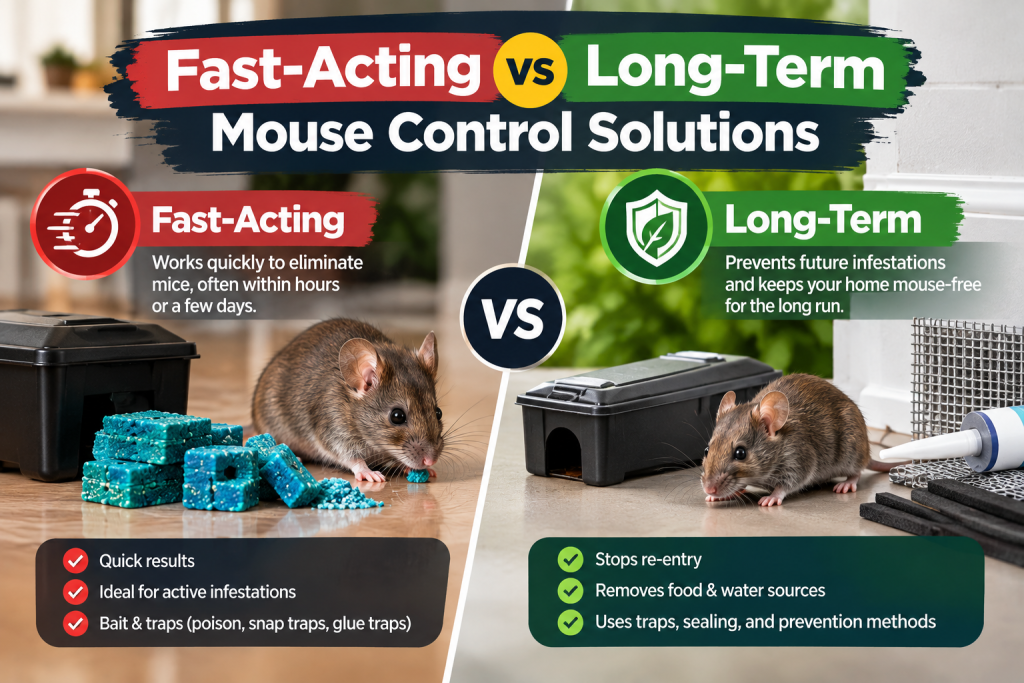
Integrated Pest Management (IPM) is employed by professionals to prevent resistance by combining multiple strategies rather than depending on a single product. Key elements include:
· Rotating control methods
· Limiting poison use
· Sealing entry points
· Eliminating food sources
Steps Homeowners Can Take
You don’t need expensive tools to mitigate resistance risks. Smart practices include:
· Rotate Control Methods: Avoid repeating the exact same rodent poison or trap type indefinitely.
· Correct Placement: Place mouse control products where mice naturally travel.
· Follow Label Instructions: Ensure proper dosage and safety.
· Conjugate Prevention with Control: Seal entry points and clean up food sources.
Non-Chemical Tools in Preventing Resistance
Non-chemical approaches play a major role in slowing resistance. Exclusion, sanitation, and deterrents minimize overall reliance on poison.
For instance, devices like the Ultrasonic Mouse Repellent Plug in Pest Repeller use sound waves to drive mice away without chemicals. While they work best alongside other interventions, they help alleviate pressure on chemical rodenticides.
Final Thoughts
Can mice develop resistance toward control methods? Yes, particularly when mouse poison, rodent poison, and rodenticides are applied haphazardly or repeatedly without a comprehensive strategy. Resistance can be genetic or behavioral, making infestations harder to manage over time.
Smart management—combining prevention, rotation, non-chemical tools, and responsible use of mouse control products like the Ultrasonic Mouse Repellent Plug in Pest Repeller—outsmarts rodent adaptability and ensures long-term success.