Blog
Fall Pest Prevention: Inspection Guide

Fall Pest Prevention happens at a critical time in the year. Fall changes the pest picture in the Pacific Northwest. Stinging insects change their behavior, termites swarm, and the insects we call fall invaders start hunting for somewhere to spend the winter. A lot of them are looking at your house.
Interstate Pest Management has been family-owned and serving the Pacific Northwest since 1963, and October looks the same every year. When we walk a property this time of year we’re after three things: conducive conditions, entry points, and evidence that pests are already on or in the home. We recently inspected a house in Southwest Washington to build winterproofing recommendations for the homeowner, and this guide follows that same walk. You can do a rough version of it yourself with an hour and a flashlight.
Start with what’s drawing pests in
Rodents are on a deadline
The fall months are a critical period for mice and rats. They need food, but shelter is the bigger driver. Their summer habitat is about to get cold and wet, and predators get more desperate as their own food supply thins out. That pressure pushes commensal rodents, meaning the house mouse and the Norway rat, to go looking for safer refuge. In neighborhoods with a mature tree canopy, add the roof rat, which travels branches and wires to the roofline.
Once a rodent finds a comfortable winter hiding spot, it starts insulating. Lawn clippings, fabric, paper, fiberglass insulation: anything soft and easy to carry. A garage with an open bag of birdseed and a pile of cardboard is a complete rodent starter kit, and it’s the kind of thing you can fix in an afternoon.
Water brings in the wood destroyers
Every living thing needs water, including the wood decaying fungi that cause rot. Rot belongs to a group of pests we call WDOs, or wood destroying organisms. When moisture gets into a house, it attracts WDOs big and small. Termites, powderpost beetles, carpenter ants and others take advantage of those conditions and multiply the damage the water started.
October is the right month to go looking for water where you don’t want it. The rain hasn’t fully settled in yet, so you can still see where it’s pooling, where it’s splashing back onto siding, and where a gutter is putting it in the wrong place.
Fall invaders need one thing
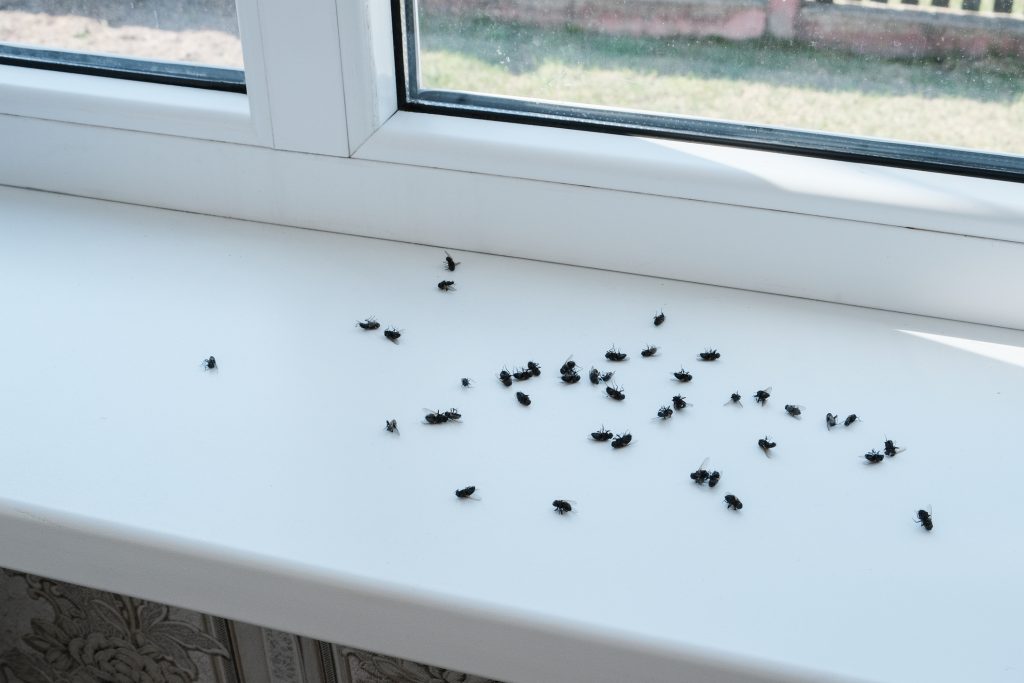
Brown marmorated stink bugs, western boxelder bugs, multicolored Asian lady beetles, cluster flies. These are the overwintering insects, and they need shelter and nothing else. They enter winter as adults, so they aren’t looking for food, water, or a mate while they’re in your house.
They go through a process called diapause, which is close to hibernation for insects. Metabolic activity is suppressed, so they survive on very little energy. They also produce glycerol, which works as an antifreeze and keeps cold temperatures from damaging their cells and tissue. They get in through small cracks and crevices and settle into void spaces like wall cavities and attics, where the harborage protects them while they sleep.
Then look at how they get in
Foundation vents
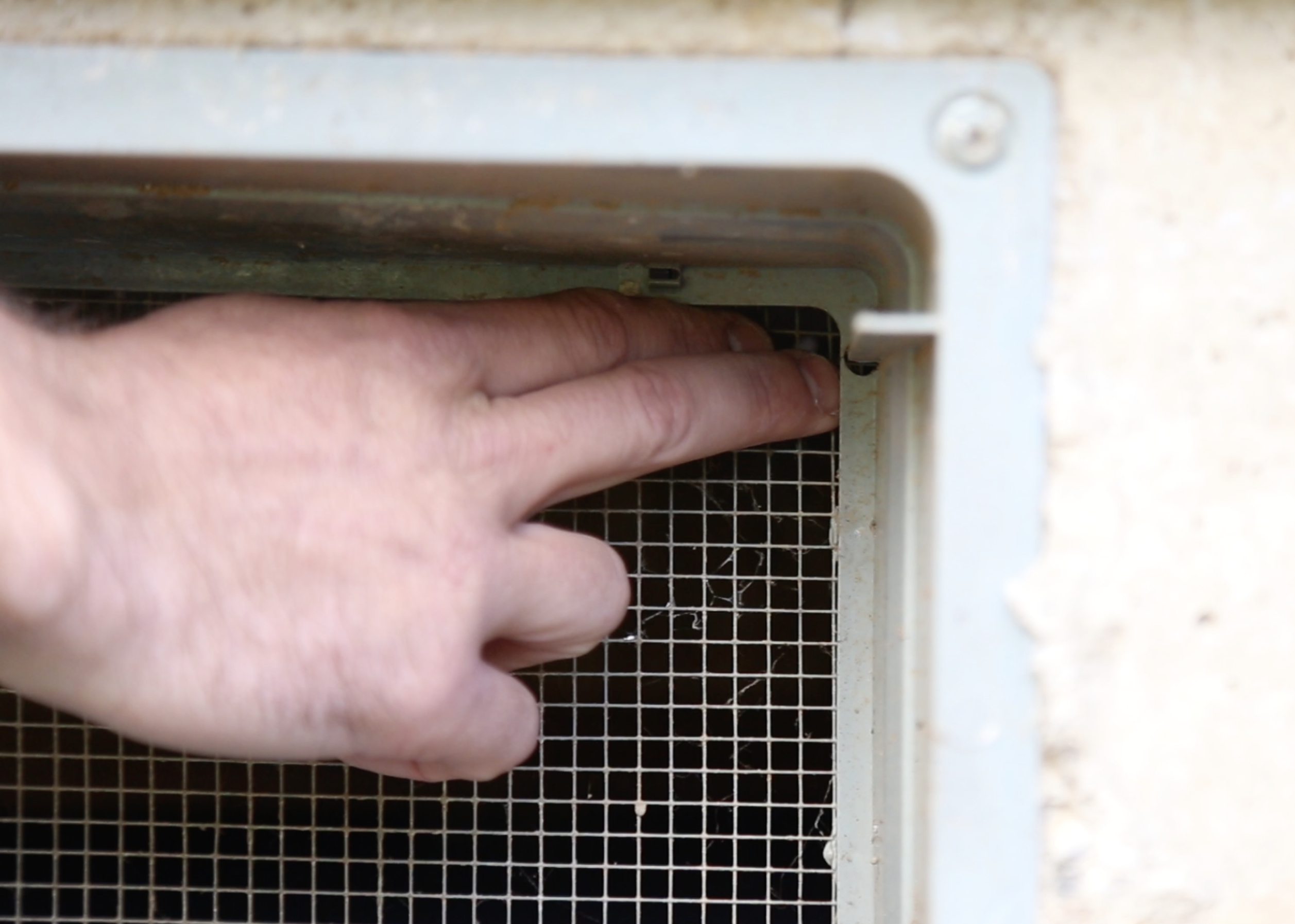
We always check these first. A damaged screen is a front door for mice, rats, and wildlife like raccoons, skunks, and possums. Push on each screen to test its strength, and repair anything with a gap larger than a quarter inch.
A useful field test: an opening the diameter of your pinky is enough for a mouse, and one the diameter of your thumb is enough for a rat. In the industry we say a quarter inch for mice, half an inch for rats. On the Southwest Washington house, one vent had gaps on both sides wide enough to fit fingers into. If fingers go in, a mouse has no trouble at all.
That threshold isn’t just ours. Oregon State University Extension tells homeowners to seal any gap larger than a quarter inch around doors, windows, vents and crawl space screens, and to keep bird seed, pet feed and garbage in containers with tight-fitting lids. It’s the same short list, from a source with no service to sell you.
Utility penetrations
Anywhere a line runs through the exterior wall, look closely at the seal. Most of these were caulked when the house was built, and caulk shrinks, cracks, and pulls away. A penetration that looks fine from ten feet away often has a gap opening up right at the edge of the old sealant.
Crawlspace doors and garage doors
Exterior crawlspace doors need to seal tightly. If the frame has gaps around the edges, they can be filled with steel wool or a specialty caulk, or the door can be adjusted for a uniform fit.
Check your garage door seals too. If you can see light, rodents can see an opportunity. They use their whiskers to detect slight changes in temperature and air pressure, so they don’t need to see the gap to find it. Plenty of homeowners don’t realize the garage is a route to the rest of the house. Rodents get into the wall behind an electrical panel, squeeze through gaps around a furnace, or walk under an interior door that doesn’t sit flush.
Gutters
Clogged gutters do double damage. The leaf litter and organic decay attract a long list of pests on their own, and the standing water feeds the rot problem above. Fascia boards, sheeting, trusses and other lumber absorb moisture from a gutter that overflows regularly or stays saturated.
Construction gaps
These are the hardest to spot and the hardest to fix. A construction gap is any place where building materials aren’t perfectly squared or flush, leaving an opening. They show up around bird blocks and soffits, at the sill plate on top of the foundation, and in dormers.
Finding them usually takes a trained eye and a few tools, so don’t take it as a failing if you can’t. They’re worth the effort, because they’re often the primary entry point on a house. Siding is part of this. If there’s a gap between the siding and the sill plate, a mouse can climb up, get over the top of the plate, and drop into the crawlspace.
Make the house less attractive
Identifying the sources is half the job. Addressing them is the other half, and most of this half is free.
- Seal up pet food and put away bird feeders. There’s no perfect container, but we’ve had the best luck with rubber or plastic bins with a lid that latches.
- Clear the garden shed and garage. Get the accessible food and the nesting material off the floor. Rodents build with paper, string, cardboard and insulation.
- Drain standing water and clean the gutters. This is the one that pays off twice, on pests and on rot.
The goal is to make the house as unattractive as possible. Something will always be outside your control, but every one of these adjustments removes a reason for a pest to come inside.
Insects are the harder half
Keeping insects out is a bigger task than keeping rodents out, because they fit through openings that are genuinely tiny. It isn’t reasonable to expect that you’ll keep every insect out of your house. With fall invaders, the goal is volume: the more you keep out, the better your winter goes.
Soffit vents can be retrofitted with 20 mesh screen. Doors, windows, and siding should be caulked and painted often enough to stay weatherproof and tightly sealed. Window screens and door weather stripping need to be maintained rather than replaced once a decade.
What if they’re already inside?
Say you did the walk and found mice already living in the crawlspace. Or you handled every termite prevention step and the house is full of swarmers anyway. There’s still plenty you can do, but the honest answer is that every situation is different. Every rodent and insect population at every house is there for its own reason, using its own entry points and its own winter harborage. The fix for your boxelder bug problem may look nothing like your neighbor’s.
Two things worth remembering. Fall invading insects won’t hurt you and won’t damage your home, so there’s no need to panic over a cluster of lady beetles on the ceiling. A vacuum usually handles them. Rodents are the opposite: once they’re in, they don’t leave on their own, and they chew wiring and contaminate insulation while they stay. That’s the one to move on quickly, and it’s why rodent work is most of what we do all winter.
Want this as a printable list? Get the free Fall Pest-Proofing Checklist below, organized by attractants, rodent openings, insect exclusion, and evidence to write down.
How we handle fall prep
Working with us is three steps: schedule an inspection, get a firm price and a written plan, then we handle it season by season.
Most homes here do better on a recurring plan than on one-off treatments, because pest activity in the Pacific Northwest continues in every season and each season brings a different problem. Exclusion work before fall, ants before spring, wasps before August. If pests show up between visits, we come back and re-treat at no charge. You can see how that works on our Year-Round Prevention page.
We serve the full Portland metro, plus Vancouver, Salem, Olympia, and Kelso/Longview.
Frequently asked questions about fall pest prevention
When should I start fall pest prevention?
October is the sweet spot in the Pacific Northwest. Rodents are actively looking for winter shelter, overwintering insects are gathering on warm walls, and the rain hasn’t settled in enough to hide where water is going. Work done in October gets ahead of the pressure. Work done in January is cleanup.
What size gap can a mouse get through?
A quarter inch is enough for a mouse and half an inch is enough for a rat. If you’d rather not carry a tape measure, an opening the diameter of your pinky will pass a mouse and one the diameter of your thumb will pass a rat.
How do I know if something is already living in my crawl space?
Look for droppings, gnaw marks, rub marks along joists, and insulation that’s been pulled apart or matted down. Evidence changes the plan, because sealing a house with rodents already inside just traps them in there with you.
Are boxelder bugs and stink bugs dangerous?
No. Fall invading insects won’t hurt you and won’t damage your home. They’re in diapause and they’re waiting out the winter. A vacuum is usually enough for the ones that turn up inside on a warm day.
Can I really seal my house against insects?
Not completely, and nobody can. Insects fit through openings far smaller than anything you’ll caulk. The realistic goal with fall invaders is volume: 20 mesh screen on soffit vents, current caulk and paint on doors, windows and siding, and maintained screens and weather stripping will keep most of them out.
Why does my neighbor’s fix not work at my house?
Because every population is there for its own reason. Different entry points, different harborage, different conditions drawing them in. Two houses on the same street can need two different plans, which is why we inspect before we quote.
Get ahead of winter
A little prevention now saves a bigger headache in January, because once pests are inside the walls the solution gets more complicated. What you’re buying with an October afternoon is a quiet attic, dry framing, and a house that stops looking like an option.
If you’d rather have someone else crawl under the house, we do this every day. Contact Interstate Pest Management, book online, or call (503) 782-1899. We’ll tell you exactly what we find and what it’ll take to fix it.
Not ready to call? Take the checklist and walk the house yourself this weekend.
Get the free Fall Pest-Proofing Checklist
Every item from this inspection on one printable page, grouped by attractants, rodent openings, insect exclusion, and evidence to write down. Drop your name and email and we’ll send it straight to your inbox.