Blog
Common Signs of a Mouse Problem (Before It Gets Serious)

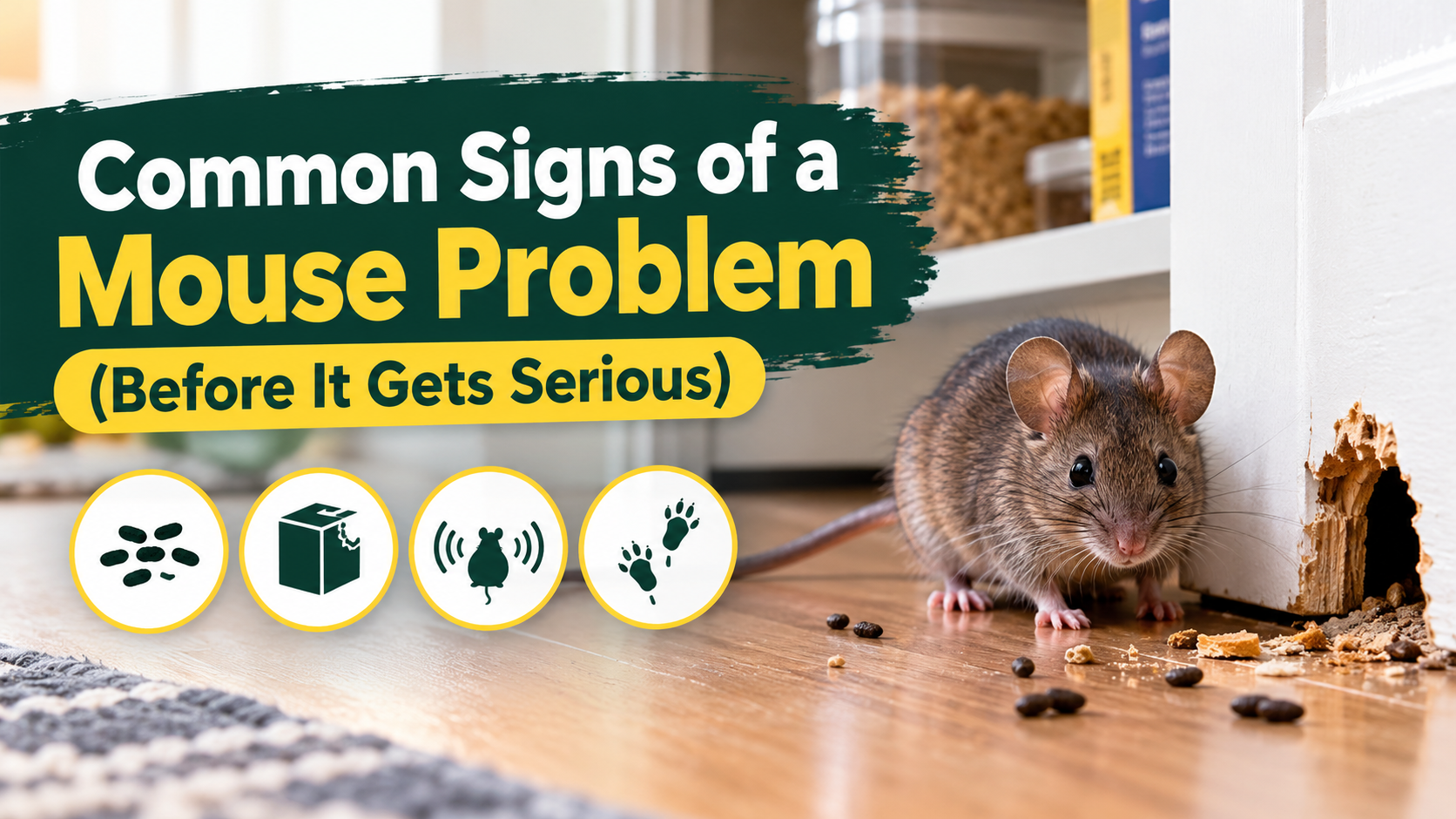
Even a mouse issue can hardly begin with an infestation. Mice in the house show their presence silently leaving behind minor traces before the owners are aware of what is occurring in their houses. It will help you intervene earlier than the situation gets out of control and even before more potent tools of the rodent such as mouse poison or rodenticides are required.
The early detection of these signs helps to save money and stress, as well as to minimize the health risks and destruction of property. The following are the most prevalent mouse problem indicators and why it is important to deal with them at an early stage.
The Importance of Early Detection.
Mice reproduce quickly. One pair may grow up to a severe infestation within several months. At the time when the first signs are neglected, homeowners tend to take cruel actions and place rat poison rodenticide or the best mouse poison on the market, which are associated with both safety and environmental issues.
The earlier you notice the problem the better you have control and the better choice.
Droppings in Hidden Areas
Droppings can be considered one of the first and most widespread signs of mice. The droppings of the mouse are small, dark, and shaped like pellets and usually resembling rice grains.
Droppings usually occur in such common places as:
· Inside cabinets and drawers
· Along baseboards
· Behind appliances
· Pantries and food storage rooms
New droppings are wet and brown, whereas the old ones are dry and flaky. The droppings normally represent that mice are in the process of feeding around.
Scurrying and Scratching Noises.
Whenever you hear someone scratching, squeaking or scurrying, be it during the night or day, then you are sure that there is some action of mice. Mice become active at night hence most audible then.
These sounds often come from:
· Walls
· Ceilings
· Attics
· Under floors
Neglecting these sounds may enable the infestation to extend until it needs a more drastic solution, that is, the use of mouse poison.
Chew Marks on Domestic Objects.
The teeth of mice never cease to grow hence they are perpetually chewing to make them blunt. The initial symptoms of a mouse problem are the chewing of:
· Food packaging
· Cardboard boxes
· Furniture edges
· Electrical wiring
Wires that have been chewed pose a great threat especially because they cause more electrical fires. The result of this kind of damage usually makes homeowners think of the most appropriate rodent poison, yet prevention and early intervention are much safer.
Unusual Pet Behavior.
Pets can sense the presence of mice before human beings. When your cat or dog suddenly starts to be obsessed with specific spots, gluing its eyes to the wall, sniffing corners, or digging under appliances, it might mean that there are mice.
Such a reaction of pets is frequently one of the initial warning signs before the damage is seen.
Grease Marks and Rub Trails.
The mouse leaves greasy smudge marks as the fur leaves a trace where the mice have crawled on baselines and walls. These rub trails are faint yet they are more pronounced with an increase in activity.
You may notice:
· Dark streaks along walls
· Smudges near holes or cracks
· Marks around entry points
These tracks indicate that there is a lot of foot traffic and show that mice have established paths in your house.
Strong or Unusual Odors.
A mouse problem may present a persistent musty or ammonia-like odor. This smell is attributed to urine and nesting materials and is intensified with increasing infestations.
In extreme cases, homeowners resort to mouse poison or rodenticides once odor problems arise, and it is possible to avoid this phase altogether by resolving the issue before it advances.
Nesting Materials.
Mice nest with soft materials which include:
· Paper
· Fabric
· Insulation
· Dryer lint
The detection of shredded materials in places where they are hard to be found such as closets, drawers or behind appliances is a clear indication that mice are nesting in your house.
Infestations may later develop fast once nesting has started.
Damage of Foods and Contamination.
Mice pollute food much more than they can eat. Signs include:
· Torn food packaging
· Small bite marks
Damages can be caused to even closed things. This contamination usually compels homeowners to buy mouse control products or dispose of huge volumes of food.
Glimpses—Even Just One Mouse.
The sight of a mouse, even once, should not pass unnoticed. Mice are great at concealment, therefore whenever one is seen, it usually indicates the presence of more mice in the vicinity.
It is of particular concern when seen during the day, because mice usually remain hidden during the day as long as the population is not too high.
Entry Points Around the Home.
Little holes, cracks and openings around doors and foundations represent silent warnings of a mouse problem that is about to occur. Mice are able to squeeze through holes that are as minute as a coin.
Common entry areas include:
· Door gaps
· Garage doors
· Utility line openings
· Foundation cracks
These points of access are frequently the reasons why mice got inside a long time before it was even evident.
When Early Signs Are Ignored.
Unless early warning signs are observed, the growth of infestations, further destruction, and health hazards multiply. Homeowners are usually at this phase when they seek to get the most effective mouse poison inside their homes by using rat poison rodenticide or search for the best indoor mouse poison.
Although poison may be useful, it becomes much better and more controlled when applied promptly and in moderation.
Choosing the Right Response.
Early screening can be taken to take specific action rather than mass usage of poisons. This can entail closing entry points, enhanced sanitation, or minimal use of rodenticides depending on the severity.
To control the activity of the mouse in case of necessity, the use of professionally formulated solutions like Farnam Just One Bite used as per label instructions alongside preventive measures is suitable.
It Is Better to Prevent than to Cure.
Preventing infestations in their initial stages is the most effective way of avoiding the use of mouse poison or the most effective rodent poison. Frequent inspection, adequate food storage, and closing entry points would significantly reduce the chances of severe mouse issues.
Final Thoughts
A mouse problem does not emerge abruptly. Droppings, sounds, gnaw marks, smells, and slight changes in your house are all red flags which should not be disregarded. Responding in time will avoid property damage, health hazards, and the necessity of aggressive mouse control products.
In case of any early indicators that grow and extra control is necessary, such solutions as Farnam Just One Bite may be useful as part of an overall, responsible decision. Nevertheless, the most effective method of dealing with rodents is the detection of signs and management of the issue before it becomes severe.
Being awake today will prevent you a great deal of trouble tomorrow.